



Patio + Paver Restoration Naperville: Sanding, Repair & More
If your patio or walkway looks wavy, the joints are washing out, sections feel like they are sinking, or your patio is weed and moss-ridden, our paver restoration services can often fix the problem without a full replacement. The Poly Guys LLC provides patio and paver restoration services throughout Naperville, Lisle, Warrenville, Woodridge, and all surrounding areas, and help homeowners fall in love with their patios and other hardscape surfaces all over again. To schedule a walkthrough or ask questions about your patio, driveway, or other outdoor space, call (331) 333-0363.
Request Your Free EvaluationWhy Naperville Homeowners Call The Poly Guys
The Poly Guys focus specifically on hardscape restoration rather than general contracting or routine exterior cleaning. Although we are happy to help clients with simple power washing from time to time, our specialization matters when pavers begin to sink, shift, or lose joint sand. As the owners, we are directly involved from evaluation through to completion. Our team stays current with materials and installation methods through ongoing industry training, including national hardscaping events, and we apply that knowledge to real-world conditions at our clients' homes. We make patios beautiful again, but we also make sure they are structurally sound and ready to drain correctly.
What Our Patio and Paver Restoration Services Can Fix
Sunken and Uneven Pavers
Patios and walkways often settle unevenly as base material shifts or washes out. This can create low spots, trip hazards, or pooling water. We lift affected sections, correct the base below, and reset pavers so the surface sits flat and stable again.
Joint Sand Loss and Weed Intrusion
When joint sand erodes, pavers lose that ever-so-important lateral support. Gaps allow weeds to take hold and accelerate movement. Restoration includes removing failing material and installing fresh polymeric sand that locks pavers in place and limits future intrusion.
Surface Wear, Staining, Weeds, Moss and More
Over time, pavers collect organic buildup and stains that hide their original appearance. Deep cleaning is part of restoration of course, but it is performed with surface stability in mind rather than as a standalone maintenance service. We handle both the cosmetic and structural needs of your pavers (as well as crack repair and other necessary tasks).
Get Free QuoteOur Patio and Paver Restoration Process
Inspection and Problem Identification
When we arrive at a property, we walk the patio, observe problematic areas, and pay attention to how the pavers respond to weight. Low spots, loose edges, and shifting sections usually tell us that something is wrong. We also look at how water behaves after rain, where it sits, and where it exits the space. Movement is often tied to base washout or gradual settlement rather than a single failure, and identifying that early changes how the restoration is handled.
Leveling, Resetting, and Re-Sanding
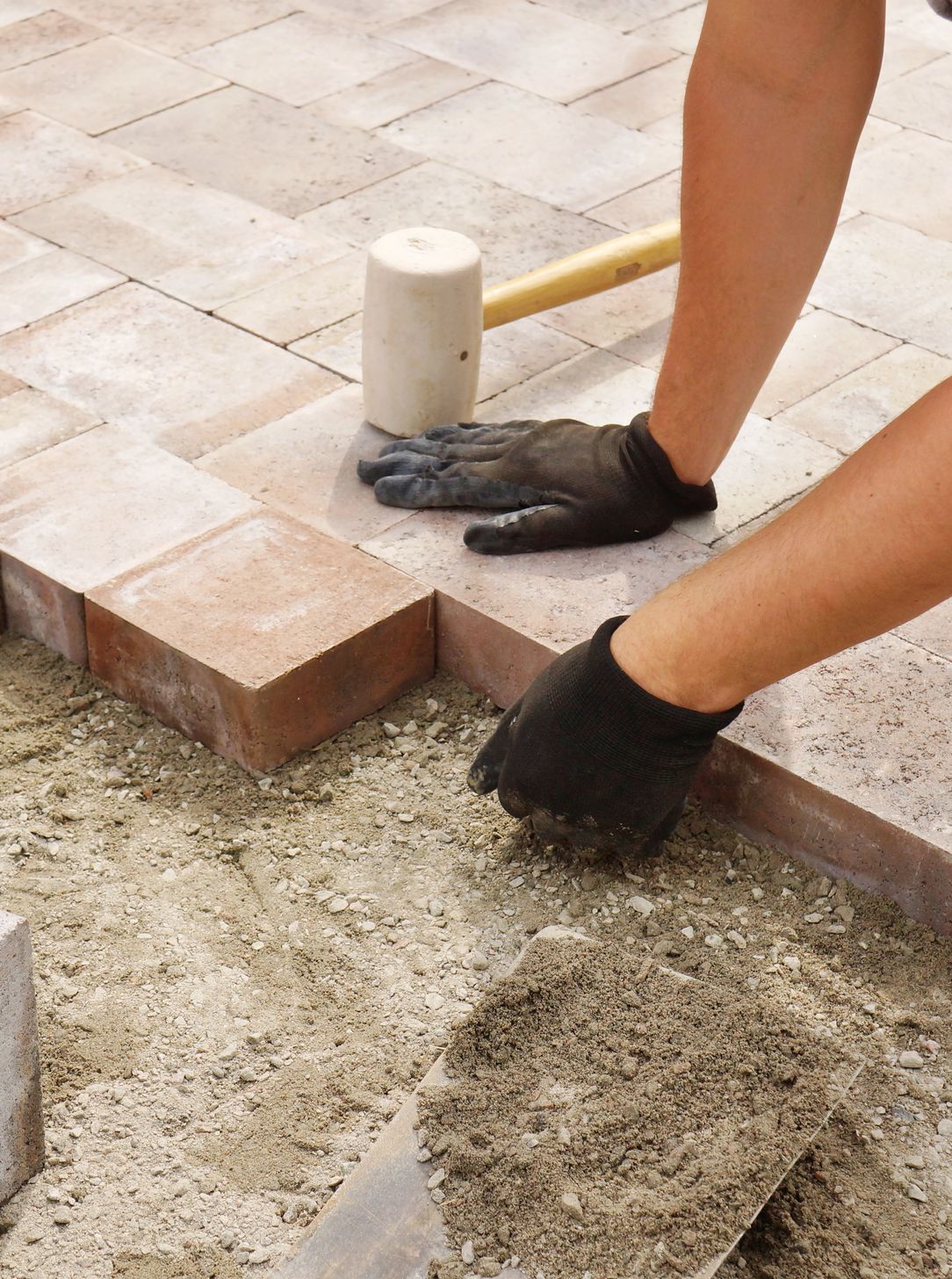
Once we isolate the affected sections, we remove pavers by hand and expose the base below. In some areas, we have to rework compacted material that has loosened over time, and in others, it means correcting the grade so water moves away. After the base is addressed, we reset the pavers to match surrounding elevations and restore a consistent surface. We then install fresh polymeric sand and work it into the joints to provide lateral support and reduce future movement. This step matters more than most homeowners realize! Joint stability plays a major role in how long the repair holds.
Optional Surface Sealing After Restoration
After the patio is stable again, we talk through whether sealing makes sense for the space. Some homeowners want added surface protection or color enhancement once restoration is complete, but others prefer to leave the pavers as they are. We do not treat sealing as part of the restoration by default. Instead, we look at how the patio is used, how much exposure it gets, and whether sealing would actually add value in that situation.
Get Free QuotePaver Types Commonly Restored in Naperville
Concrete and Brick Paver Restoration
Concrete and brick pavers are common on patios and driveways, especially in developments built over the last few decades. These materials usually respond well to restoration when settlement and joint failure are handled correctly. Our focus stays on surface alignment and long-term stability rather than cosmetic fixes alone.
Natural Stone Patio Restoration
Natural stone patios, including flagstone, require a slower and more deliberate approach. Each piece sits differently, and spacing matters. During restoration, we work to correct movement while keeping the original layout intact. The goal is a surface that sits right underfoot without changing the character that drew the homeowner to stone in the first place.
Patterned and Older Installations
Older patios and patterned layouts, such as herringbone or mixed paver designs, often show movement in specific zones rather than across the entire surface. We focus on those zones instead of pulling everything apart. Preserving pattern alignment and spacing helps the finished patio look cohesive rather than repaired.
Get Free QuoteFAQs Regarding Patio and Paver Restoration
How do I know if my patio needs restoration or replacement?
If pavers are intact but uneven, loose, or missing joint sand, restoration is often possible. Replacement is usually only needed when materials are failing or the base cannot be corrected.
Can sunken pavers be fixed without tearing everything out?
Yes. Restoration targets affected sections rather than removing the entire patio, which helps control cost and disruption.
What causes pavers to sink or shift over time?
Common causes include base settlement, erosion, drainage issues, and root pressure. Restoration addresses both the surface and what is happening beneath it.
Is polymeric sand always used during restoration?
Polymeric sand is commonly used because it helps stabilize joints and reduce weed growth, but the final choice depends on the condition of the patio and how it is used.
Will restoration fix drainage or water pooling issues?
If pooling is caused by settlement or improper slope, restoration can often correct it by resetting pavers to proper grade.
How long does patio and paver restoration usually take?
Most projects take one to three days depending on size and complexity. Timing is discussed during the initial walkthrough.
Can restoration be done in sections if only part of the patio failed?
Yes. Many projects focus only on problem areas while leaving stable sections untouched.
Does restoration change the look of my existing pavers?
Restoration aims to preserve the existing look while improving surface condition. Any visual changes are discussed ahead of time.
Should sealing be done at the same time as restoration?
Sealing is optional and depends on surface condition and homeowner goals. It is typically considered after restoration work is complete.
How long should restored pavers last before needing service again?
With proper base correction and joint support, restored pavers can remain stable for many years before needing attention.
Schedule Patio and Paver Restoration in Naperville
If your patio or walkway feels uneven, unstable, or worn down, restoration may be the right next step. The Poly Guys provide on-site evaluations in Naperville to determine what repairs make sense and which services can wait. To schedule a walkthrough or ask questions about your project, call (331) 333-0363 and speak directly with the team.
Get Free Quote