



Paver Sealing Plainfield, IL: Patio, Driveway, Walkway + More
Pavers are built to last, but how long they actually perform comes down to how they are cared for over time. Sealing will protect your paver or concrete surface from moisture, staining, and gradual breakdown. The Poly Guys LLC provides professional paver sealing services throughout Plainfield and nearby communities, helping homeowners preserve patios, walkways, and driveways as part of a broader approach to hardscape care. To schedule a walkthrough or ask questions about your outdoor space, call (331) 333-0363.
Request Your Free EvaluationSealing is an Important Part of Hardscape Maintenance
Sealing works best when it is viewed as part of an ongoing maintenance cycle rather than a one-time upgrade. Pavers naturally absorb moisture, lose joint sand, and crack as seasons pass. Sealing helps slow that process by adding a protective barrier, but it does not replace inspection, cleaning, or structural repair when those steps are needed.
Many homeowners choose sealing after installing new pavers or completing restoration work. Others seal surfaces that are already in good shape to help delay future repairs. In both cases, sealing supports the longevity of the hardscape when it is applied at the right time and for the right reasons.
What Happens To Unsealed Pavers Over Time
Moisture Absorption and Surface Breakdown
Unsealed pavers absorb water through both the surface and the joints. Over time, that moisture contributes to surface wear, discoloration, and gradual material fatigue. While this process happens slowly, it accelerates in areas with frequent use or poor drainage.
Joint Sand Erosion and Edge Movement
Joint sand provides lateral support that keeps pavers locked together. As rain and foot traffic wash that sand away, edges begin to loosen and individual pavers shift more easily. Sealing helps protect intact joint sand from erosion, reducing movement before it becomes noticeable underfoot.
Staining and Uneven Weathering
Oil drips, food spills, leaves, and organic debris leave marks that penetrate deeper into unsealed pavers. Over time, some sections darken while others fade, creating an uneven appearance that becomes harder to reverse.
Surfaces Where Sealing Delivers The Most Value
Patios Used For Entertaining and Daily Living
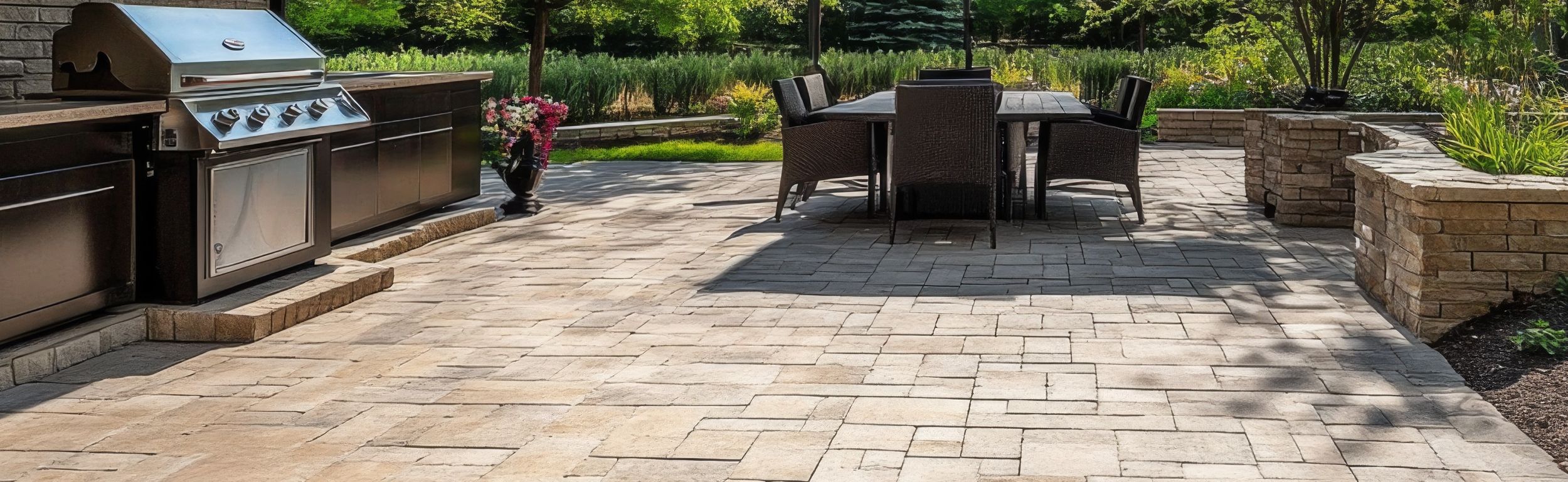
Patios see consistent use from furniture, grills, and foot traffic. Sealing helps limit how deeply spills soak in and keeps surfaces easier to maintain. For homeowners who use their patios regularly, sealing helps preserve appearance without constant deep cleaning.
Walkways That Channel Foot Traffic and Water
Walkways experience concentrated wear along specific paths. Water runoff and foot traffic wear down joints faster than on larger surfaces. Sealing helps reinforce those joints and protect edges where erosion usually starts.
Driveways Subject To Vehicles and Runoff
Driveways face heavier stress from tires, oil, and water movement. Sealing does not prevent all marks, but it reduces absorption and slows discoloration, making routine cleanup more manageable and helping the surface age more evenly.
Get Free QuoteOur Sealing Methodology
Determining Whether Sealing Is Appropriate
Before sealing, we assess surface stability, joint condition, and overall wear. If pavers are loose, uneven, or missing joint sand, sealing is postponed until those issues are addressed. Applying sealer to an unstable surface often shortens its lifespan.
Preparing The Surface For Even Penetration
Surface preparation is handled with longevity in mind. We remove buildup and residue so the sealer can penetrate or bond evenly. Inconsistent preparation often leads to patchy results and early failure, which is why this step is never rushed.
Selecting Sealers Based On Use, Not Looks
Sealer selection is driven by how the space is used rather than appearance alone. Patios, walkways, and driveways often require different products depending on traffic, exposure, and maintenance expectations.
Application, Cure, and Post-Seal Guidance
Sealers are applied evenly and allowed to cure under appropriate conditions. We walk homeowners through cure times and usage guidelines so the surface is protected during the critical early period.
Get Free QuoteSealer Options Explained Simply
Penetrating Sealers For Natural Finishes
Penetrating sealers soak into the paver and help reduce moisture absorption without changing the appearance. These are often chosen when homeowners want protection without sheen.
Film-Forming Sealers For Enhanced Appearance
Film-forming sealers create a visible layer that can enhance color or add sheen. These options are discussed carefully to make sure the surface condition supports that type of finish long-term.
Additives For Traction and Specialized Areas
Slip-resistant additives can be incorporated where traction matters, such as walkways, steps, and areas near entry points.
When Sealing Should Be Deferred
Unstable Surfaces
If pavers move underfoot or joints have failed, sealing can lock in existing problems rather than solve them. Stability always comes first.
Surfaces That Need Structural Attention First
When settlement or drainage issues are present, restoration is usually the better first step. Once the surface is stable again, sealing can be considered as part of ongoing care.
Get Free QuoteFrequently Asked Questions About Paver Sealing
How Long Does Paver Sealing Typically Last?
Most professional sealers last several years, though high-traffic areas may require resealing sooner. Longevity depends on use, exposure, and maintenance habits.
Does Sealing Change How Pavers Feel Underfoot?
When applied correctly, sealing does not significantly alter surface feel. Traction additives can be used where grip is a concern.
Can Older Pavers Be Sealed?
Yes, as long as the surface is stable and properly prepared. Older pavers are evaluated carefully before sealing is recommended.
Does Sealing Reduce Weed Growth?
Sealing helps protect joint sand and limit weed intrusion, though no outdoor surface is completely maintenance-free.
How Soon Can The Area Be Used After Sealing?
Light use is often possible within a day, though full cure times vary based on product and conditions.
Will Sealing Lock In Existing Stains?
Surface preparation addresses staining before sealing. Existing marks are evaluated during the walkthrough.
Is Sealing Necessary After Restoration?
No. Sealing is optional and depends on homeowner goals and surface condition.
How Often Should Pavers Be Resealed?
Many homeowners reseal every few years, depending on traffic and exposure.
Does Sealing Work On Driveways With Vehicles?
Yes, when the correct product is used and cure times are respected.
When Is Sealing Not Recommended?
Sealing is not recommended when pavers are unstable or joints have failed and need repair first.
Schedule Paver Sealing In Plainfield
If your patio, walkway, or driveway is in good condition and you want to protect it as part of a long-term care plan, sealing may be the right next step. The Poly Guys LLC provides clear evaluations, honest recommendations, and hands-on service from start to finish. To schedule a walkthrough or ask questions about paver sealing in Plainfield and surrounding areas, call (331) 333-0363 today.
Get Free Quote