



Paver Sealing, Cleaning & Restoration in Aurora, IL
Pavers can look worn long before you need to consider replacing them. The Poly Guys LLC cleans, re-sands, seals, levels, repairs, and restores patios, driveways, walkways, and other paver surfaces throughout Aurora and nearby areas. We specialize in getting more life from existing hardscapes, whether yours needs routine maintenance or significant repair work. Call (331) 333-0363 to schedule an on-site evaluation. We can make your patio, sidewalk, or other hardscaping element look like new.
Request Your Free EvaluationRestore Your Existing Pavers
A patio can have several problems happening at the same time. The pavers may be dirty but perfectly usable. Joint sand may have disappeared in places, while one corner has settled enough to hold water. We look at the whole installation and build the job around what we find.
Sometimes that means cleaning and sealing. Other projects call for fresh polymeric sand, leveling, or more involved repairs. We would rather put the right combination together than prescribe the same restoration package to every patio we see.
Professional Paver Cleaning
Moss, algae, weeds, dirt, leaf stains, and other buildup can make good pavers look pretty rough. We clean the surface thoroughly and pay attention to the condition of the joints while we work. There is a big difference between cleaning a hardscape and simply hitting everything with as much pressure as possible. Aggressive washing can remove joint material and create more work than it solves.
Cleaning also gives us a better starting point for the rest of the project. If we plan to re-sand or seal the pavers, we want old debris and contaminants out of the way first. Once everything is clean, it is also much easier to see cracked units, low areas, open joints, and other problems that were hidden underneath the buildup.
Polymeric Sanding And Joint Restoration
The joints are a working part of a paver system. Sand between the individual units provides lateral support, and when enough of it disappears, the pavers have more room to move. Empty joints also become convenient places for weeds to grow and water to enter.
We clean deteriorated material from the joints and install polymeric sand where appropriate, taking the time to work it down into the spaces rather than leaving a thin layer near the top. Once properly installed and activated, the material binds together and gives the installation much-needed joint support.
If your patio has been pressure washed repeatedly over the years, take a look at the joints. You may be surprised by how much material is gone.
Paver Sealing And Surface Protection
Sealing can be a great finishing step once the pavers are clean, stable, and properly sanded. Depending on the product and desired finish, a sealer can help resist staining, reduce moisture absorption, protect the joints, and make future cleanup easier. We can also discuss natural-looking versus color-enhancing options based on what you want the finished surface to look like.
We don't want to seal over problems, though. If an area needs to be leveled or repaired, we would rather handle that first. Preparation has a direct effect on how the finished sealing job looks and performs.
Get Free QuoteWhen Your Pavers Need More Than Maintenance
Cleaning and sealing have their place, but neither one fixes a patio that has physically moved. Once pavers begin sinking, rocking underfoot, spreading at the edges, or directing water toward the wrong place, we shift our attention below the surface.
Resetting Sunken And Uneven Pavers
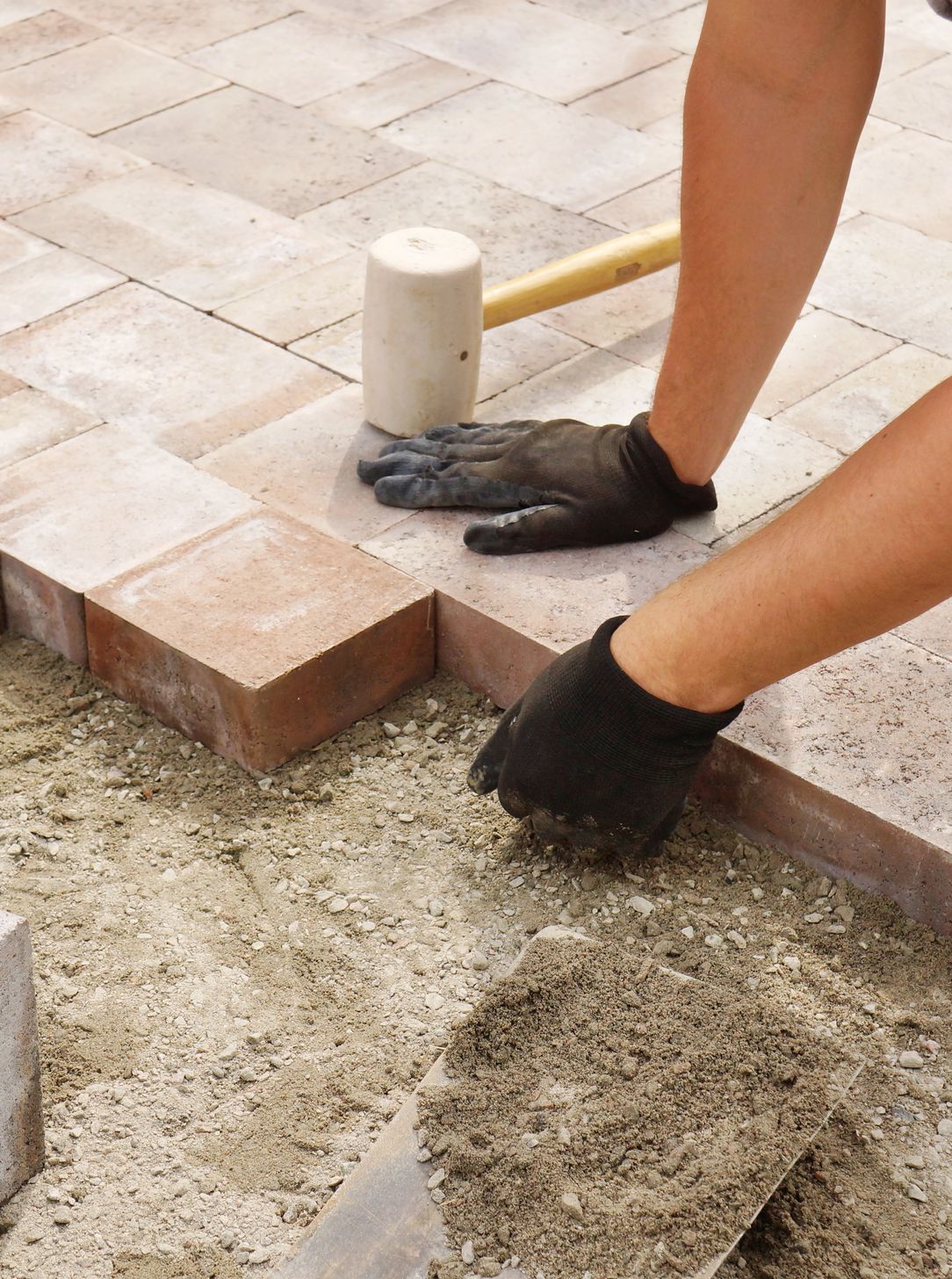
We can often repair a low or unstable section without dismantling the entire installation. We carefully remove the affected pavers so we can see what happened underneath. Depending on what we find, we may need to correct or rebuild portions of the base before resetting the pavers at the proper elevation.
This type of repair is useful for more than appearance. A small drop can become a trip hazard, cause furniture to sit awkwardly, or create a low spot where rainwater collects. Fixing the support underneath gives us a much better repair than trying to compensate from the surface.
Fixing Drainage And Grade Problems
Sometimes the first clue that a patio has moved is a puddle. An area that drained properly for years begins holding water after every rain because settlement has changed the pitch of the surface.
When that happens, we look at where the water is coming from, where it needs to go, and how the surrounding pavers are sitting. We can often reset affected sections at a better grade and improve surface drainage as part of the restoration. More complicated drainage problems may require additional corrections, which we will discuss after seeing the property.
Repairing Edges, Patterns And Localized Failures
A failing edge can allow an otherwise good installation to slowly spread apart. Patterned patios introduce another challenge because anything we dismantle needs to go back together correctly. Herringbone, mixed-size designs, borders, and older installations all require a little more attention during selective repairs.
Our preference is to disturb as little good work as possible. If most of the patio remains solid, we'll focus on the section causing trouble and preserve the original layout wherever we can.
Get Free QuoteRestoration For Patios, Driveways, Walkways And More
Our paver work extends well beyond backyard patios. We restore paver driveways, front walks, entry areas, pool surrounds, garden paths, and other hardscape surfaces. The repair itself changes with the application. A driveway has to deal with vehicle loads, while even a relatively small height difference can become annoying on a frequently used front walk.
That's why we evaluate the individual surface instead of treating every collection of pavers the same way. Cleaning, joint repair, leveling, and sealing all have their place. What matters is choosing the work that fits the installation in front of us.
More Hardscape Services From The Poly Guys
We can also help when the problem extends beyond the pavers themselves. The Poly Guys repairs retaining walls that have started leaning, separating, or moving, including failures related to drainage and the structure behind the wall. We also seal concrete driveways, patios, sidewalks, garage floors, and other sound concrete surfaces. If several hardscape features around your property need attention, we can look at them during the same evaluation and talk through what deserves priority.
Get Free QuoteWhy Call The Poly Guys For Paver Restoration?
Hardscape restoration is our specialty. We aren't a general contractor adding paver work onto a long menu of unrelated services. Owners Adam Sprague and Dylan Reichard stay directly involved in the business, and our team continues to invest in hardscape-specific education and training.
That background becomes especially useful when we're working with an installation somebody else built years ago. We have to figure out how it was constructed, why a particular area failed, and how much of the existing work we can reasonably save. Our aim is pretty simple: fix what needs fixing, preserve what is still good, and leave you with a hardscape you can enjoy again.
Get Free QuoteFrequently Asked Questions About Paver Restoration
Can a patio be restored if only part of it has sunk?
Yes, and this is actually very common. In many Aurora patios, only certain sections settle due to localized base washout, drainage patterns, or edge movement. Restoration allows us to focus on those problem areas rather than disturbing the entire surface. As long as the surrounding pavers are stable, targeted restoration can correct the issue without the cost or disruption of a full teardown.
What usually causes pavers to shift in Aurora?
Most shifting happens gradually. Base settlement, erosion from poor drainage, and seasonal moisture changes all play a role. Freeze-thaw cycles can loosen base material over time, especially in areas where water does not drain properly. Root pressure and edge restraint failure can also contribute. Restoration addresses both the visible movement and the conditions beneath the surface.
Is restoration disruptive to my property?
Compared to replacement, restoration is relatively low-impact. We remove and reset pavers by hand, work in defined sections, and avoid unnecessary demolition. Most projects are completed within a few days, and the surrounding landscape is typically left undisturbed. We walk through access points and work areas ahead of time so there are no surprises.
Will restored pavers stay level long-term?
When restoration includes proper base correction and joint stabilization, pavers can remain stable for many years. Longevity depends on factors such as drainage, soil conditions, and how the surface is used. Our goal is to correct the underlying cause of movement rather than applying a short-term fix that will need attention again soon.
Do weeds come back after restoration?
Fresh polymeric sand significantly reduces weed growth by locking joints and limiting space for seeds to take hold. That said, no outdoor surface is completely maintenance-free. Occasional organic debris can still allow growth over time, but restoration greatly improves resistance compared to washed-out or open joints.
Can drainage issues be corrected during restoration?
In many cases, yes. If settlement has changed the slope of the patio or created low spots, restoration can reset pavers to improve water flow. We look closely at how water moves across the surface and where it exits so pooling issues are addressed as part of the repair whenever possible.
Does restoration change how the patio looks?
The intent is to preserve the existing appearance while improving stability and function. Pavers are reset to maintain spacing and pattern alignment, not redesign the surface. Any changes, such as cleaning results or optional sealing, are discussed ahead of time so expectations are clear.
Is sealing required after restoration?
No. Sealing is optional and depends on how the patio is used, how much exposure it gets, and what the homeowner wants long-term. Some surfaces benefit from added protection, while others perform well without it. We treat sealing as a separate decision rather than a default part of restoration.
How soon can the patio be used after restoration?
In most cases, patios can be walked on shortly after the work is complete. Cure time for joint sand or optional sealing may affect when furniture can be replaced or heavier use can resume. We go over timing during the project so you know exactly what to expect.
When is replacement the better option?
Replacement is usually only recommended when pavers are structurally failing, severely damaged, or when the base cannot be corrected without full removal. If restoration is not the right solution, we will explain why and outline what replacement would involve so you can make an informed decision.
Get Free QuoteRestore And Protect Your Pavers In Aurora
Maybe your patio just needs a good cleaning and fresh joint sand. Maybe sections need to come up so we can correct the base underneath. Or perhaps everything is in good shape and you're ready to protect it with professional sealing. The Poly Guys can take a look and tell you what we'd recommend. Call (331) 333-0363 to schedule your paver evaluation in Aurora or a nearby community.
Get Free Quote